Dig or Don't Wear: Inside the Ukay-Ukay Hunt That's Rewiring American Thrifting
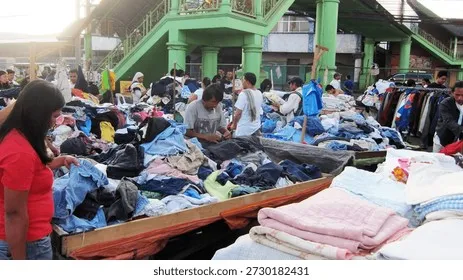
Photo: crowded outdoor thrift market stall piles of secondhand clothes Philippines, via www.shutterstock.com
There's a moment in every ukay-ukay run that American thrift stores never quite replicate. You're elbow-deep in a mountain of clothes stacked higher than your head — no racks, no organization, just a textile avalanche — and your fingers brush against something that feels different. Heavier stitching. A tag that crackles. You pull it out and it's a 90s Champion reverse weave, or a deadstock band tee, or a Carhartt jacket that's older than you are. Price: less than a fancy coffee.
That's the ukay moment. And it's changing how a whole generation of American resellers thinks about the hunt.
What Exactly Is Ukay-Ukay?
The word comes from the Tagalog verb 'ukay' — to dig or sift through. And that's literal. Ukay-ukay markets are sprawling secondhand bazaars, most famously concentrated in Baguio City, where bales of donated or exported clothing are unpacked and sold by the piece, often for the equivalent of one to three US dollars.
The goods come from all over: charity donations, thrift export bales, closet cleanouts from Los Angeles to Sydney. A shirt you donated in Ohio could be hanging in a Baguio stall by summer. Which means the circle is beautifully absurd — vintage tagged 'Made in USA' ships out, gets dug up by a Filipino vendor with a sharp eye, gets resold online, and circles back into an American closet at a 400% markup.
American resellers figured this out fast. Some of the biggest vintage sellers on Depop and Grailed quietly source their inventory through ukay contacts. The Philippines isn't a secret anymore — it's the supply chain.
The Digging Ritual Is the Whole Point
Here's what separates ukay culture from your average Goodwill run: the dig is a skill, a social event, and a workout all at once.
Regulars know the rhythms. Go early, before the good bales get picked. Wear clothes you don't mind sweating in, because mountain-digging in tropical heat is no joke. Bring cash in small bills. Learn to read a garment by touch before you even see it — check the seam, feel the tag, weigh it in your hand. Veterans can spot a genuine vintage piece from three layers down.
And unlike the sterile, silent aisles of a US thrift chain, ukay stalls are loud. Vendors shout prices, barkada crews dig together and hype each other's finds, and haggling is expected — not as confrontation, but as conversation. You don't just buy a jacket. You earn it.
There's an ethics layer too, and honest ukay heads talk about it. The trade has real critiques: some argue that flooding local markets with cheap secondhand undercuts local textile industries, and labor conditions in sorting warehouses deserve scrutiny. The best resellers acknowledge the chain they're part of instead of pretending the grail fairy delivers vintage.
Why Americans Are Copying the Format
US thrift culture has been trending toward curation for years — the bin stores, the $40 'vintage' section at your local consignment shop, the racks pre-sorted by an algorithm. Efficient, sure. But it removes the thing that makes thrifting magical: the unknown.
Ukay-style hunting is the antidote. It's why bin stores and unsorted 'thrift by the pound' spots have exploded across American cities. It's why resellers post dig videos that rack up millions of views. People don't want a curated shelf. They want the treasure hunt, the gamble, the story.
A Mini-Guide: Hunting Ukay-Style Stateside
You don't need a flight to Baguio to dig like a tambay. Here's how to run the ukay playbook in the US:
1. Find the unsorted spots. Goodwill outlets (the 'bins'), church rummage sales, estate liquidation warehouses, and by-the-pound vintage warehouses are your closest stateside equivalent. Skip the curated racks entirely.
2. Learn to feel before you look. Heavy cotton, single-stitch hems, thick printed tags — train your fingertips. The dig rewards muscle memory over eyesight.
3. Go early, go often. Ukay regulars hit stalls when fresh bales drop. Same energy here: new inventory days at the bins are game days.
4. Haggle politely where it's welcome. Estate sales and flea markets? Absolutely. The bins? No. Read the room.
5. Dig with your people. The barkada element is non-negotiable. Bring friends, split the haul energy, celebrate each other's finds like game-winners.
6. Respect the chain. If you're reselling, price with some soul. The ukay spirit is about the find, not just the flip.
The Long Game
The ukay-ukay scene understood something American thrift culture is only now catching up to: secondhand isn't a discount, it's a lifestyle. It's patience, community, and the thrill of earning something nobody else has.
So next time you're staring at a mountain of unsorted clothes at some warehouse outlet, don't reach for the easy rack. Do what Manila's been doing for decades.
Dig in.