Sing Outside My Window: The Ancient Filipino Move Making Swipe Culture Look Lazy
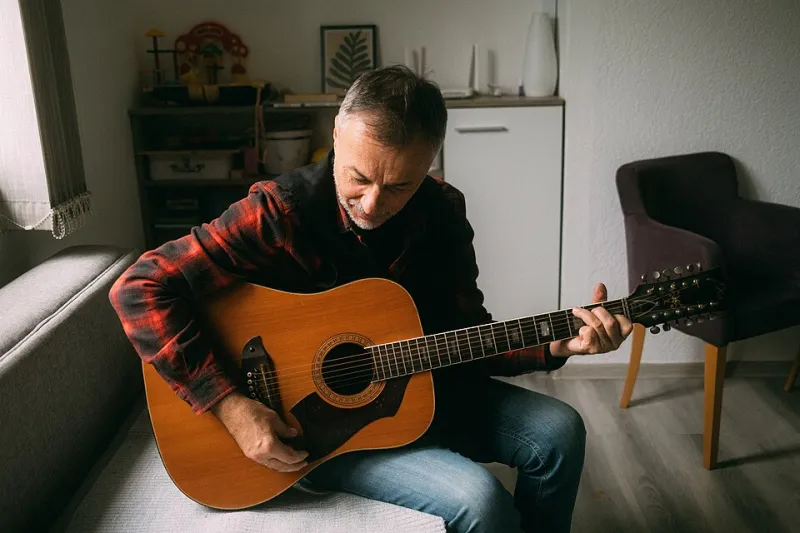
Photo: Shixart1985, CC BY 2.0, via Wikimedia Commons
There's a particular kind of exhaustion that comes with modern dating that nobody warns you about. The endless swiping. The conversations that die at 'wyd.' The third date that feels like a job interview with better lighting. If you've ever closed Hinge at 1 AM feeling like you just worked a double shift at the romance factory, we have good news: an old Filipino tradition is coming for your love life, and it involves a guitar, a window, and actual courage.
It's called harana, and it might be the most romantic thing America has forgotten how to do.
Wait, What Is Harana?
Picture this: it's evening in the old Philippines. A young man, nervous as heck, shows up beneath the window of the person he's courting — sometimes with friends backing him up, sometimes with a hired guitarist if his own six-string skills were shaky. He sings. Traditional harana songs like Dahil Sa Iyo or O Ilaw pour out into the night. The object of his affection gets to decide, from the safety of her window, whether this guy's effort earns him a conversation.
No algorithm matched them. No bio said '6'0 because apparently that matters.' Just a human being, a song, and a whole lot of skin in the game.
The practice flourished during the Spanish colonial era and carried well into the 20th century, when courtship was a slow, deliberate, family-adjacent affair. It wasn't just about the music — it was about the effort. Learning the songs. Working up the nerve. Showing up, literally, at someone's door.
Compare that to 'u up?' and it's not even a contest.
The Swipe Economy Is Burned Out
Here's the thing about dating apps: they turned romance into a marketplace, and marketplaces get exhausting. Studies have consistently shown that heavy dating app use correlates with lower self-esteem and higher decision fatigue. When there are 'infinite' options, every match feels replaceable, and every person starts treating connection like a commodity.
Filipino-American musician Marco Delacruz, who performs with a small harana-inspired ensemble in Los Angeles, puts it bluntly: 'The apps train you to lead with convenience. Harana is the opposite of convenience. You can't outsource it. You can't ghost a serenade — everybody on the block heard you sing.'
That's the secret sauce, honestly. Harana is anti-ghosting by design. It's public (at least to the household), it's vulnerable, and it requires something the swipe economy never asks for: genuine preparation.
From Manila to the Stoops of Brooklyn
The revival isn't happening in museums or cultural centers — it's happening on rooftops in Silver Lake and brownstone stoops in Bed-Stuy, where Filipino-American couples and musicians are adapting the tradition for American contexts.
Delacruz has performed at over a dozen 'courtship concerts' in the past two years, sometimes for anniversaries, sometimes for actual proposals. 'Half my bookings now are people who met on the apps and want their proposal to feel like it meant something,' he says. 'They're trying to overwrite the origin story.'
In Brooklyn, a loose collective of Fil-Am singer-songwriters has started offering what they jokingly call 'stoop serenades' — acoustic sets performed outside an apartment window or front door, often with the neighborhood as an accidental audience. One couple we spoke to, who asked to go by J. and Rhea, said the serenade Rhea staged for J.'s birthday became the moment their relationship 'shifted gears.'
'Anybody can buy flowers,' J. told us. 'Nobody forgets the person who rented a guitar amp and sang badly outside their third-floor walk-up while the neighbors filmed it.'
Note: you do not have to sing well. That's not the point. The point is that you sang.
Slow Romance Is the Ultimate Flex
There's a reason this resonates right now. We're living through a full-blown nostalgia boom for anything analog — vinyl, film cameras, flip phones, handwritten letters. Harana fits neatly into that hunger for things that feel real and effortful.
But it's more than aesthetics. Filipino culture has always understood something American dating culture is still figuring out: that courtship is a process, not a transaction. In the traditional harana, the singing was just one stage. There were visits, formal introductions, the whole 'pamamanhikan' where you'd eventually meet the family. Time was built into the system. Rushing wasn't an option.
'The apps compress everything,' says Dr. Elena Reyes, a Filipino-American sociologist who studies courtship practices. 'Harana stretches it back out. It says: this person is worth multiple evenings of my life, worth practicing for, worth the risk of public embarrassment. That reframing alone changes how you treat them.'
How to Harana (American Edition)
You don't need to fly to Manila or rent a mariachi band. The spirit of harana translates:
- Skip the text. Show up. Knock. Bring a speaker if you're shy, bring your voice if you're brave.
- Put in rehearsal hours. Learning someone's favorite song on guitar says more than any curated profile ever could.
- Make it an occasion. Filipino courtship was communal — involve your barkada, make it a small event, let people witness it.
- Respect the window. Harana always left the choice with the person being serenaded. That's the etiquette. That's the respect.
- Play the classics. Need a starter pack? 'O Ilaw,' 'Dahil Sa Iyo,' 'Ikaw,' or honestly any song that makes you nervous to sing out loud.
The Last Song
Nobody's saying harana will single-handedly fix American dating. But there's something worth sitting with here — the idea that romance works better when it costs something. When it's slow, deliberate, and a little bit terrifying.
The tambay philosophy has always been about slowing down and showing up for the people around you. Turns out our grandparents' courtship ritual was just that idea, set to music.
So the next time you match with someone and feel that familiar fatigue creeping in, consider the old ways. Grab a guitar. Learn one song. Show up outside their window — or, you know, their fire escape, because zoning laws.
Worst case, you'll embarrass yourself beautifully. Best case, you'll remember what dating felt like before it became a part-time job.