Silog O'Clock: The Filipino Breakfast Plate Quietly Taking Over American Brunch
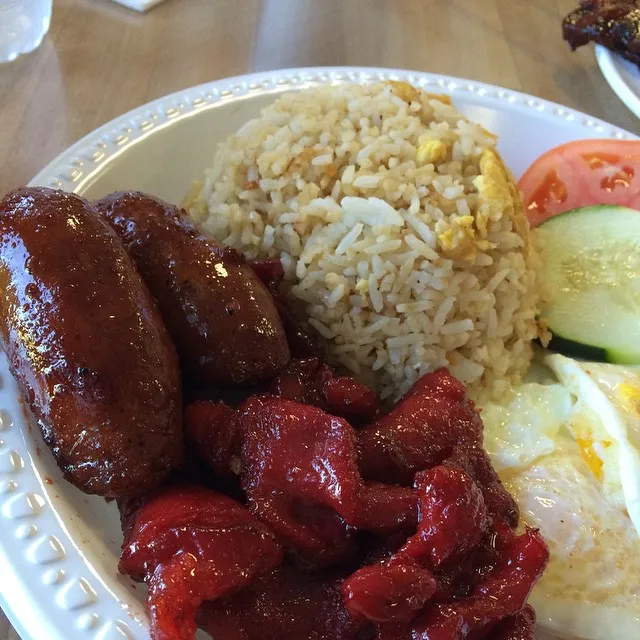
Photo: Arnold Gatilao from Oakland, CA, USA, CC BY 2.0, via Wikimedia Commons
There's a moment happening at brunch tables across America right now, and if you haven't caught it yet, you're about to. It looks like this: a sizzling plate of garlic rice, a runny egg with lacy brown edges, and a portion of cured meat that makes your standard bacon look like a warm-up act.
That's a silog. And it's coming for your weekend.
What Even Is a Silog?
Let's break it down for the uninitiated. Silog is Filipino breakfast shorthand — a portmanteau of sinangag (garlic fried rice) and itlog (egg). Add a protein and you get the full name: tosilog (pork tocino, sweet and sticky), longsilog (longanisa sausage), bangsilog (milkfish). It's a formula, like a BLT, except the formula has been perfected over generations.
The genius is in the architecture. The rice soaks up the runny yolk. The yolk tames the vinegar bite of the meat. A side of pickled papaya — achara — cuts through everything like a palate-cleansing reset button. Nothing on the plate is doing nothing. Compare that to the average $18 avocado toast situation and the math starts to feel insulting.
From Kainan to Kaminski's
Filipino breakfast has always been built for volume. This is food engineered for people who worked overnight shifts, farmed at dawn, or — in the modern equivalent — stayed up until 4 AM in a barkada group chat. It's hearty, unpretentious, and it doesn't care about your macros.
That ethos is exactly why it's landing with American brunch crowds right now. The pandemic-era brunch scene got exhausted: same sourdough, same poached eggs, same $7 cold brew flights. Diners wanted something with a pulse.
Enter the Filipino-American chefs who never stopped cooking this way. In Los Angeles, spots like The Park's Finest and the late-night institution Lasa at the Original Farmers Market helped normalize Filipino flavors for a broader audience. In New York, Maharlika and Tito Rad's in Queens have been serving silog to line-out-the-door crowds for years. Chicago has Cebu, Houston has a growing kainan scene along the Beltway. The blueprint is spreading.
The ube-fication of Brunch
Of course, there's a gateway drug, and it's purple. Ube — the purple yam that launched a thousand Instagram posts — has been the trojan horse. Once you've had ube pancakes or a halo-halo parfait, the leap to garlic rice and longanisa is short. Dessert first, mains after. That's just strategy.
But chefs leading the charge want you to know the culture didn't come from a color trend. "Ube gets them in the door," one LA-based chef told us, "but the silog is what makes them come back every Sunday." The plate is the point. It's affordable, it's filling, and it's built to be shared across a table of friends who all ordered something different so everyone can steal a bite.
Champorado Season Is a Mindset
Then there's the sleeper hit: champorado. Filipino chocolate rice porridge, sticky and bittersweet, traditionally swirled with condensed milk and — trust us — served with salted dried fish on the side. It's oatmeal's cooler cousin, and it's starting to appear on weekend specials boards from Seattle to Austin.
It's the kind of dish that makes people pause mid-spoonful. Chocolate for breakfast isn't new. Chocolate rice porridge that tastes like someone's grandmother made it with actual intention? That's new to most American tables, and it's converting skeptics fast.
Why This Hits Different
Filipino breakfast works at brunch because it never needed to be reinvented for it. Brunch, at its best, is about lingering. It's about a table that doesn't turn over, a pot of coffee that keeps getting refilled, a meal that stretches into the afternoon because nobody wants to leave.
Filipino culture already operates on that frequency. Meals are communal by default. Plates arrive when they're ready, not in choreographed courses. Nobody's rushing you out. The silog plate isn't a brunch innovation — brunch is finally catching up to it.
So next Saturday, skip the line at the third-wave coffee shop. Find the Filipino spot in your city — there's probably one closer than you think — and order the longsilog. Get the extra garlic rice. Order the champorado for the table.
Kain muna. The flex can wait.