Your Bar Has a $12 Espresso Tonic but No Soul: Let's Talk About the Sari-Sari Standard
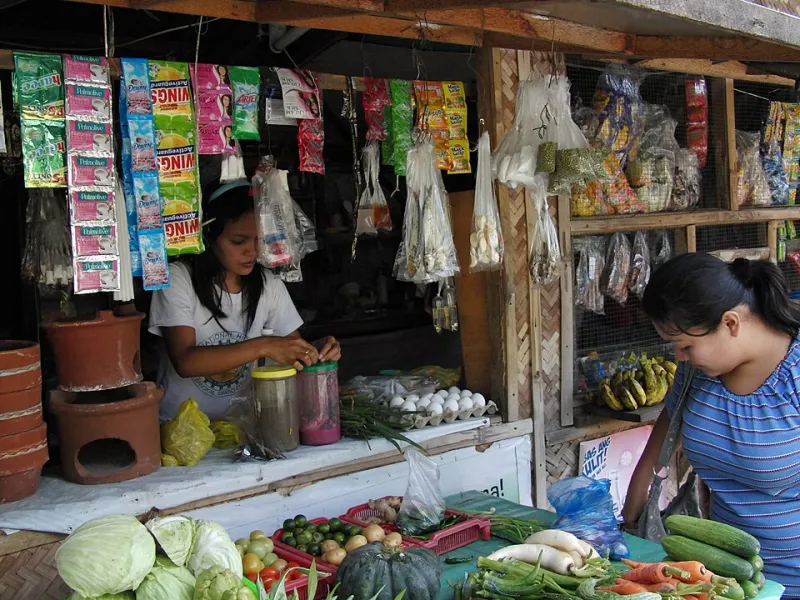
Photo: Burgermac from pornichet, France, CC BY 2.0, via Wikimedia Commons
There's a bar in my neighborhood — you know the type. Exposed brick, Edison bulbs, a menu printed on reclaimed wood, and a bartender who will absolutely tell you about the single-origin notes in your $12 espresso tonic. It's beautiful. It's designed. And after twenty minutes, I'm checking my phone.
Meanwhile, half a world away, my tita's sari-sari store has fluorescent lighting, a freezer that wheezes like an old dog, and a videoke machine that's been fighting for its life since 2009. Nobody ever wants to leave. Ever.
That's the gap, and it's not an accident.
The Over-Designed Hangout Problem
American third spaces have been through the aesthetic industrial complex. Every café looks like every other café. Every bar has the same craft cocktail list and the same playlist of mid-tempo indie. It's all pleasant, all photogenic, and — here's the crime — all passive. You sit, you consume, you leave.
The sari-sari store operates on a completely different philosophy. It's not designed for you; it's built by the neighborhood, for the neighborhood. The owner knows your name and your tab. The seating situation is chaotic and improvised. Somebody's cousin is fixing a bike out front. The karaoke machine is connected to a speaker that's slightly too big for the room, and that's the point.
Nothing about it is optimized. Everything about it is alive.
What the Sari-Sari Actually Gets Right
Strip away the nostalgia and there's real design intelligence here:
- Low barrier, high warmth. No reservation, no minimum, no dress code. A bottle of Coke costs less than a dollar equivalent. You're not buying ambiance; you're buying permission to stay.
- Mixed-purpose by default. It's a store, a snack bar, a gossip exchange, a videoke joint, and an informal community bulletin board all at once. Nobody decided this. It just accumulated.
- Intergenerational by force. Lolas, teenagers, the tricycle drivers, the office guy on his break — everyone shares the same bench. There's no "vibe" that excludes anyone.
- The tab. The sari-sari credit system — pautang, buy now, pay on payday — is trust made physical. Try imagining your local bar trusting the neighborhood like that.
The result is a space where boredom simply cannot survive. There's always a game on, always someone singing off-key, always a snack within arm's reach.
The Tambay-Certified Checklist
So here's my wishlist. If your bar, café, or hangout spot wants to earn the tambay seal of approval, steal these:
1. One gloriously bad karaoke machine. Not a tasteful acoustic night. A machine. With a mic that feeds back. Judging is mandatory and affection is the rule.
2. Snacks under five dollars. The sari-sari snack wall — chips, instant noodles, the good cookies — is the greatest loyalty program ever invented. A bar where you can get a beer and a bag of chips for cheap is a bar people return to.
3. Furniture you're allowed to rearrange. Fixed banquette seating is furniture that distrusts you. Plastic chairs that migrate with the conversation? That's community infrastructure.
4. A regular who effectively runs the place. Every sari-sari has one — the unofficial mayor who holds court all day. Give them a stool and they'll do more for your foot traffic than any ad campaign.
5. Zero pretension at the door. The test: could someone walk in sweaty off a bike shift and still feel welcome? If not, you've built a set, not a space.
6. Loitering as policy. The word tambay literally means to hang out with no agenda. The best third spaces don't just tolerate it — they're built around it. One drink, three hours, zero judgment.
The Halo-Halo Machine Is a Metaphor (But Also, Get One)
Could your average American bar actually install a halo-halo machine — that glorious shaved-ice, mixed-everything dessert chaos? Sure, some Filipino spots already do, and business is booming. But the machine is really a stand-in for something bigger: an anything-goes spirit. Halo-halo doesn't respect ingredient boundaries. Neither should a good hangout spot.
The over-designed American third space optimizes for Instagram. The sari-sari optimizes for the group chat the next morning: "remember when Tito sang 'My Way' and the whole block showed up?"
One of those builds a customer. The other builds a place people belong to. Your move, neighborhood bar.