Grab the Mic, Pass the Pride: Why Private-Room Videoke Is Eating Open Mic Night Alive
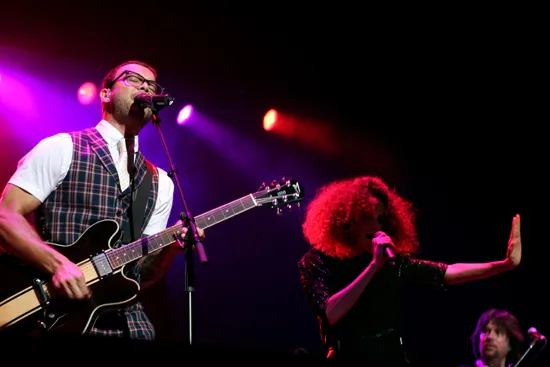
Photo: Eva Rinaldi, CC BY-SA 2.0, via Wikimedia Commons
There's a moment at every Filipino videoke night that outsiders don't see coming. Someone — usually the quietest person in the room — grabs the mic, queues up a power ballad, and absolutely detonates it. The room loses it. Nobody claps politely. Everybody screams.
If you've only ever experienced American karaoke as a solo walk to an open mic, bar lights on, strangers judging your chord progressions — you've been doing it wrong. And across US cities right now, more people are figuring that out.
The Private Room Revolution
Open mic culture has a gatekeeping problem, even when it doesn't mean to. You sign up. You wait. You perform at people. The audience is technically present but spiritually elsewhere, nursing a beer and rehearsing their own set in their head.
Videoke flips the entire equation. In Filipino-style setups — whether it's a rented private room at a KTV spot in Koreatown or a $200 Magic Sing machine hooked up to a cousin's living room TV in Jersey City — the audience is the show. Everyone sings. Everyone gets roasted. Everyone harmonizes badly on the chorus and nobody cares.
"I stopped booking open mics two years ago," says Marco Dela Cruz, who runs a private-room lounge in Carson, California, a city so Filipino it basically has its own zip code energy. "Open mic is a job interview. Videoke is a family reunion where nobody's asking about your salary."
His lounge books out three weekends in advance. The waiting list is mostly people in their twenties who didn't grow up Filipino. They just heard about it from a friend who came back changed.
The Preacher of the Mic
Every barkada — every ride-or-die friend group — has one. The person who controls the songbook. The unofficial DJ, hype man, and moral authority all in one. On the streets back home they'd call them the master of ceremony; on TambayCap we're calling it what it is: the Preacher of the Mic.
Jen Villanueva, 26, is her friend group's Preacher in Queens. Her gospel: "You never let a first-timer pick their own song. They'll choose something safe and boring. You choose FOR them. You give them the power ballad. You give them the moment."
Her queue strategy is genuinely strategic — open with a group singalong to warm the room, slot the shy friend's big number at the emotional peak, save the chaos songs for when the inhibitions are gone. "It's setlist architecture," she says, completely seriously. "You're curating a night people will talk about for months."
Playlist strategists at private-room spots have noticed the same thing. The best rooms aren't the ones with the biggest catalogs — they're the ones where the group knows how to build a night. That's a skill Filipino households have been training for generations, usually with a Magic Sing microphone and a plate of lumpia within arm's reach.
Why Americans Are Converting
The math is simple. Open mic gives you three minutes of anxiety for three minutes of applause. Videoke gives you four hours of belonging.
Gen Z and younger millennials — the loneliest generations on record, according to basically every survey — aren't looking for a stage. They're looking for a room where participation is mandatory and embarrassment is impossible. Filipino videoke culture, born in living rooms where titas sang Air Supply after Sunday dinner, is precisely engineered for that.
The spots popping up from Houston to Seattle get it. Low-pressure entry. Group bookings. Snacks included. Songs passed like a joint — you don't hoard the mic, you share it.
Start Your Own Night
You don't need a lounge. You need a screen, a speaker, a mic, and friends willing to be terrible together. The Filipino playbook:
- No solos without stakes. If you sing alone, you commit to the whole song. No bailing at the bridge.
- Duets are sacred. The more dramatic, the better.
- The roasting is the love language. If nobody claps back after your performance, check on your friends.
- Food is non-negotiable. Hanging out — tambay — is the whole point. The singing is just the soundtrack.
Open mic night had a good run. But the future of American nightlife sounds like a group of friends screaming the key change together, badly, joyfully, in a room with the door closed and the volume up.
Pull up. Grab the mic. Stay for the chorus.