Press Start Together: What the Pisonet Knows About Curing Loneliness That Your Gaming Setup Doesn't
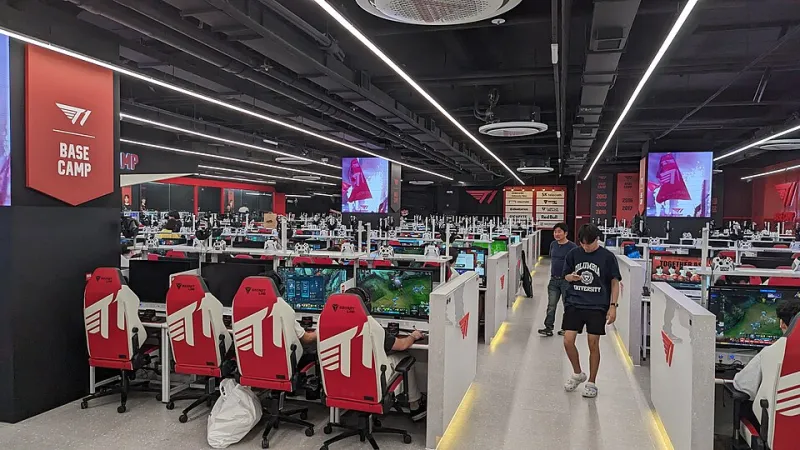
Photo: Wvdp, CC0, via Wikimedia Commons
Here's a statistic that should bother you: Americans spent the last decade upgrading their home gaming setups into cathedral-grade battle stations — 240Hz monitors, custom loops, RGB everything — while simultaneously reporting record levels of loneliness. We built the perfect rooms to be alone in.
The Philippines looked at that equation and laughed. Because Manila already solved this problem decades ago, in a cramped shop with plastic chairs and a coin box.
The Pisonet Blueprint
For the uninitiated: a pisonet is a small neighborhood internet shop, usually a handful of PCs packed shoulder-to-shoulder, charging by the minute via a coin slot — piso, one peso. Kids pool coins, squad up in games like Dota 2 or Mobile Legends, and the room becomes a living organism. Someone screams. Someone else screams louder. The whole shop knows when a team fight goes badly because you can hear it from the street.
Nobody in a pisonet is lonely. That's not a bug of the design; it's the entire point.
The economics forced the sociology. You didn't go to a pisonet because it was comfortable — the chairs are basically stools with abandonment issues. You went because your friends were there, because the energy was there, because playing Counter-Strike next to someone who can physically slap you when you whiff is a different sport than doing it through a headset.
America Is Slowly Getting the Message
Now watch what's happening stateside. Esports cafes are popping up in cities that already get it — Koreatown LA has run PC bang culture for years, and Filipino-American entrepreneurs are opening lounges in Daly City, Jersey City, and Las Vegas that borrow the pisonet model with better chairs.
Even the big players are catching on. Chain gaming lounges in Dallas, Houston, and Seattle are pivoting from "rent a console" to "rent a table" — LAN parties for corporate team-building, birthday packages for six, tournaments that fill the room with spectators who came to watch strangers become friends. The product isn't the game. It never was. The product is the room.
Five Reasons the Pisonet Model Beats Your Basement Setup
1. Physical presence changes how you play. Trash talk hits different when it's coming from three feet away. You learn to lose with grace because someone will see your face when you do.
2. The cost barrier creates community. When you pay by the minute, you make the most of it — you invite people, you rotate controllers, you share. Unlimited solo access breeds isolation. Scarcity breeds hangouts.
3. Spectating is a feature, not a bug. In a pisonet, half the fun is watching someone better than you carry a game. That's how skill passes down. Solo queue has no elders.
4. Food appears. Every good gaming lounge in America is quietly discovering what every pisonet knew: put a merienda vendor nearby and people will stay for hours. The stickiness isn't the ping. It's the fish balls.
5. You can't rage quit a room. Log off culture is easy when nobody's watching. When your barkada is physically next to you, you finish the match. You learn something about commitment.
The Tambay Theory of Gaming
We keep treating loneliness like a technology problem — better matchmaking, better voice chat, better algorithms to find your people. It's not a tech problem. It's a furniture problem. It's a third-place problem. It's the difference between playing with people and playing near them.
Filipino tambay culture — the art of hanging out with zero agenda — was always the secret ingredient. The pisonet wasn't a business; it was a porch with graphics cards. And as American gaming lounges figure this out, they're not really importing a business model. They're importing a worldview: that the game is the excuse, and the hangout is the point.
So here's the opinion section of this listicle: your $4,000 setup is not a substitute for a plastic chair next to your best friend. Find a lounge. Bring the squad. Lose a match in front of witnesses.
Game on. Together.