Forget 'How Are You?' — the Filipino Question That Actually Checks On People
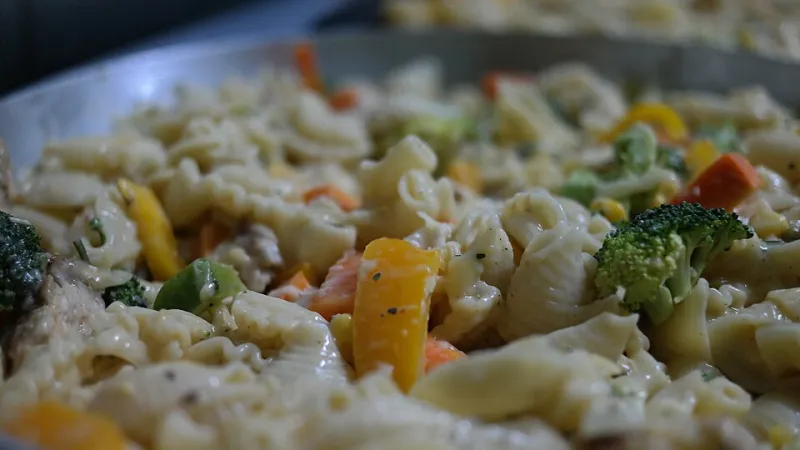
Photo: Ara Nashera, CC BY-SA 4.0, via Wikimedia Commons
There's a moment that happens in every Filipino household, and if you've never witnessed it, let me paint the picture for you.
A guest walks in. Nobody says hello first. Nobody asks about the weather. What they say is: "Kain ka na ba?" — Have you eaten yet?
That's it. That's the greeting. And before the guest can even answer, there's already a plate coming out of the cupboard.
The Question Behind the Question
Here's the thing about "kain ka na ba" — it's not really about food. Not literally, anyway. It's a check-in that skips all the fake layers and goes straight to the signal every human actually wants to send: I care about whether you're okay.
Think about what happens when an American coworker asks "How are you?" in the office kitchen. You both know the script. "Good, you?" "Good!" Elevator music plays in your head. Nothing was exchanged. Two humans performed wellness at each other and walked away exactly as hungry — physically and emotionally — as before.
Now imagine instead someone looks at you at 3 PM and says, "Yo, have you eaten?" Suddenly the question is specific. It's answerable. And if the answer is no, there's an actual next step: let's fix that.
Loneliness, But Make It Small Talk
America has a small talk problem, and it's not a secret. We've got Surgeon General warnings about loneliness, third places disappearing, and an entire generation that would rather text from the next room. The polite, contentless "how are you" exchange is basically the small talk version of a loading screen — it fills time and accomplishes nothing.
The Filipino food check-in works differently because it has stakes. Asking if someone has eaten implies you'd feed them. It implies you noticed they exist. In Filipino culture, where food is the universal love language, offering a meal is offering care — no appointment needed.
Marisol, 29, a Filipina-American nurse in Chicago, put it to us like this: "My mom asked my date if he'd eaten before she asked his name. He said no. She cooked. He's my husband now."
DJ, 24, from Jersey City, told us he uses it at his warehouse job constantly: "I'll catch a coworker on break and just go 'you eat yet?' Half the time the answer's no, and we split whatever's in the fridge. Nobody's calling it a friendship strategy, but that's literally what it is."
That's the move. It builds connection through action instead of performance.
The Mini-Guide: Feeding Your Way Into Friendship
Alright, consider this your field manual. Offering food as a social strategy is a skill, and like any skill, there's technique.
1. The Offer Is the Point (But Follow Through Anyway). Even if they say they've eaten, the asking is what lands. That said, always have a backup snack ready. A granola bar offered sincerely beats a whole dinner offered hypothetically.
2. Never Take "I'm Good" at Face Value. Filipinos know the first refusal is politeness, not truth. One gentle "you sure?" is not pushy — it's proof you actually wanted to know. If they double down, respect it. Once.
3. Share, Don't Host. You don't need to cook a feast. Splitting your fries, offering half your pandesal stash, sliding over a snack during a study session — low-stakes food sharing builds more trust than a formal dinner invitation ever will.
4. Timing Is Everything. The 2–4 PM slump and the post-work crash are prime feeding grounds. That's when "have you eaten" hits hardest, because that's when everyone's secretly starving and nobody's admitting it.
5. Remember the Answer. If someone mentioned they haven't been eating well — stress, breakups, brutal work weeks — follow up tomorrow. "Did you eat today?" twice in a row is how acquaintances become family.
Yes, This Works on Dating Apps Too
We know you were wondering. The kain check-in is arguably the most underrated opener in modern dating. "How's your week going" gets you a shrug emoji. "What's your go-to comfort food when the week is cooking you instead" gets you an actual conversation — and a second-date plan in one message.
Food talk reveals personality, budget, culture, and vibes all at once. It's small talk with a built-in future.
Kain Muna: The Whole Philosophy in Two Words
"Kain muna" means let's eat first. Before the argument, before the big decision, before the hard conversation — eat first. It's a philosophy that says care comes before everything else, and that no problem is worth solving on an empty stomach.
So here's our TambayCap challenge for the week: swap one "how are you" for one "have you eaten?" At the office. At the gym. In the group chat. Watch what happens.
Worst case, someone says yes and you learn something. Best case, you just made America a little less lonely, one plate at a time.
Now go eat something. We're asking.