Hands On, Forks Off: Why Brooklyn's Best Parties Are Ditching the Silverware for Banana Leaves
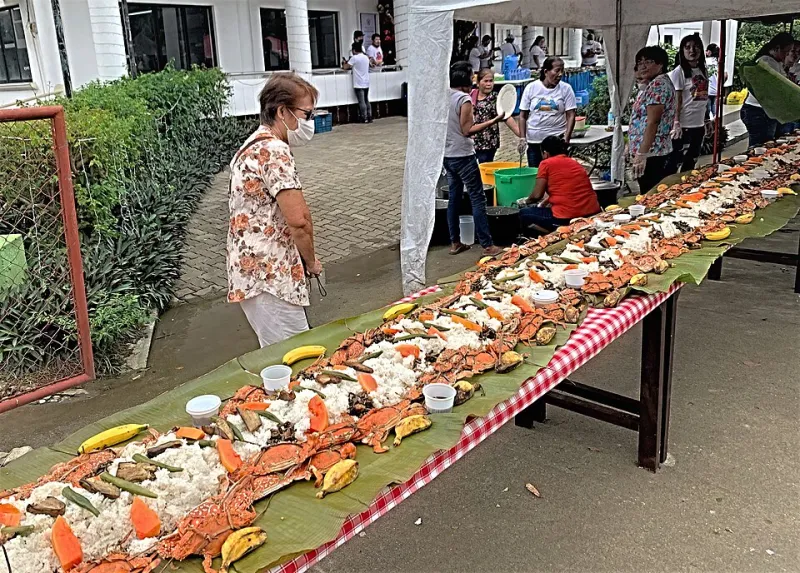
Photo: Dandy1022, CC BY-SA 3.0, via Wikimedia Commons
There's a moment at every kamayan feast that hosts describe the same way. The food's been laid out — a whole banana leaf's worth of garlic rice, grilled skewers, adobo, lumpia, mango-tomato ensalada — and the guests are standing around it like it's a museum piece. Nobody wants to go first.
Then somebody does. Hands in, no forks, no ceremony. And the room changes.
"Once one person breaks the seal, everyone breaks the seal," says Marisol Dizon, a Bushwick-based caterer who's thrown more than forty kamayan-style events in the last two years. "It's like the dinner party equivalent of the first person getting on the dance floor."
That moment — awkward, then electric — is exactly why the kamayan format is showing up everywhere from Brooklyn loft parties to Hudson Valley weddings to pop-up dinners in Portland and Austin. Call it the antidote to the stiff dinner party, served on a leaf.
What Kamayan Actually Is (And Why It Hits Different)
Kamayan literally means "with hands" in Tagalog, and the practice runs deep in Filipino food culture — long before Spanish colonization brought cutlery to the islands, eating with your hands was simply how it was done. The modern kamayan spread, often called a "boodle fight" in military and family contexts, layers everything at once: rice as the base, proteins and vegetables arranged on top, condiments and calamansi wedges scattered throughout.
The visual is undeniable. It photographs like a dream, which partly explains its Instagram-era spread. But people who've been to one will tell you the real appeal isn't the look. It's the feel.
"When you eat with your hands, you slow down without trying to," explains Chef Rico Alvarez, whose Queens pop-up series sells out in minutes. "You're feeling the temperature of the food. You're mixing the rice with the sauce yourself. There's no middleman between you and the plate. It's the most honest way to eat."
The Dinner Party Was Due for a Shake-Up
American hosting culture has long been built on a contradiction. We say dinner parties are about connection, then we spend the whole evening performing: plating individually, juggling wine glasses and forks, keeping conversation going across a table that physically separates everyone.
Kamayan throws all of that out. There's no head of the table because there's no table at all — just a long stretch of leaf-covered surface, usually a repurposed door or plywood sheet, with guests packed shoulder to shoulder around it. You reach, you share, you negotiate space with the person next to you. Conversation happens naturally because proximity demands it.
"I've watched total strangers become friends over one leaf," Dizon says. "You can't be precious about your food when someone's hand is three inches from yours going for the last piece of longganisa."
It's also, notably, a format that scales. Wedding planners have started offering kamayan as an alternative to the standard buffet line, and hosts with tiny apartments love that the whole setup collapses into cleanup that's faster than washing a single dish.
The Hosts Leading the Movement
A new wave of Filipino-American chefs and home cooks is driving the trend, often blending tradition with local ingredients. Alvarez builds spreads around whatever's at the Grand Concourse farmers market — heirloom tomatoes in the ensalada, Hudson Valley pork for the lechon-style belly. Dizon does a full vegetarian kamayan featuring coconut-adobo mushrooms that regularly converts the skeptics.
Non-Filipino hosts are picking it up too, and the chefs have thoughts on that.
"Do it right or don't do it," Alvarez says, laughing but not entirely joking. "Learn the dishes. Use real banana leaves — you can get them frozen at any Asian grocery. Understand you're borrowing from a culture that's been doing this for centuries, so credit it. Say the word kamayan. Tell your guests where it comes from."
His quick-start advice for first-timers: line your surface with parchment under the leaves, keep the rice slightly cool so it doesn't steam everything, and put a hand-washing station and towels within arm's reach of every seat.
How to Throw Your First Kamayan
Thinking about hosting one? The format is more forgiving than it looks.
- The spread: Garlic rice as the base, then two or three proteins (chicken adobo and grilled skewers are crowd-proof), plus something fresh — green mango salad cuts through the richness.
- The surface: Banana leaves, thawed and wiped down. Overlap them so there are no bare spots.
- The guests: More people is actually easier. Twelve is the sweet spot for a six-foot spread.
- The rule: No utensils on the leaf. If someone needs a fork, hand them a plate and let them eat on the side — no judgment.
The whole thing costs less than a catered buffet and lands harder than any seated dinner you've thrown. And there's a side effect hosts mention again and again: nobody's on their phone, because both hands are busy.
That's the quiet genius of kamayan. It's not a trend so much as a reminder — that food tastes better when you're in it, literally, and that the best parties are the ones where everybody's a little messy together.
Kain muna. Eat first. Talk later.